
Guide People Tents
What types of person tents are there?
Ridge tent
A ridge tent is a tent supported by a central ridge beam or pole that raises the tent's ceiling in the middle, creating a pointed roof. These tents offer good ventilation and stability, but are often less spacious than tunnel or dome tents due to their construction.
Geodesic tent
Geodetics refers to the science of measuring and depicting the Earth's surface. It includes techniques such as determining distances, angles, and heights to create precise maps and models.
dome tent
A dome tent is a sturdily constructed tent with a dome-like, curved shape that can withstand extreme wind and weather conditions. It offers plenty of interior space and is particularly popular for outdoor activities due to its stability.
Tunnel tent
A tunnel tent is a tent consisting of several curved poles arranged one behind the other, forming an elongated, tunnel-like design. This shape offers plenty of space and stability, especially in strong winds, and is well-suited for extended outdoor stays.
Pop-up tent
A pop-up tent is a tent that automatically pitches as soon as it's removed from its bag thanks to flexible poles. It's quick and easy to set up, making it ideal for camping or festivals where quick handling and comfort are essential.
Tipi tent
A teepee tent is a traditional, conical tent originally used by North American Native Americans. It features a pointed shape and a central pole for support, offering excellent ventilation and a spacious interior, providing plenty of room for a larger group.

How big should a tent be?
The choice of tent size depends primarily on how many people will be using the tent. Tents are available for 2 to 6 people, but larger models for groups are also common.
For an adult, you should plan for a sleeping area of about 70 cm to provide enough space for sleeping. Also consider the height of the people staying in the tent. A person taller than 1.80 m needs at least 2 m of length to stretch out comfortably. Additionally, the tent should have enough space for gear and luggage. A general tip: the larger the tent, the heavier it is. Keep this in mind when making your selection.
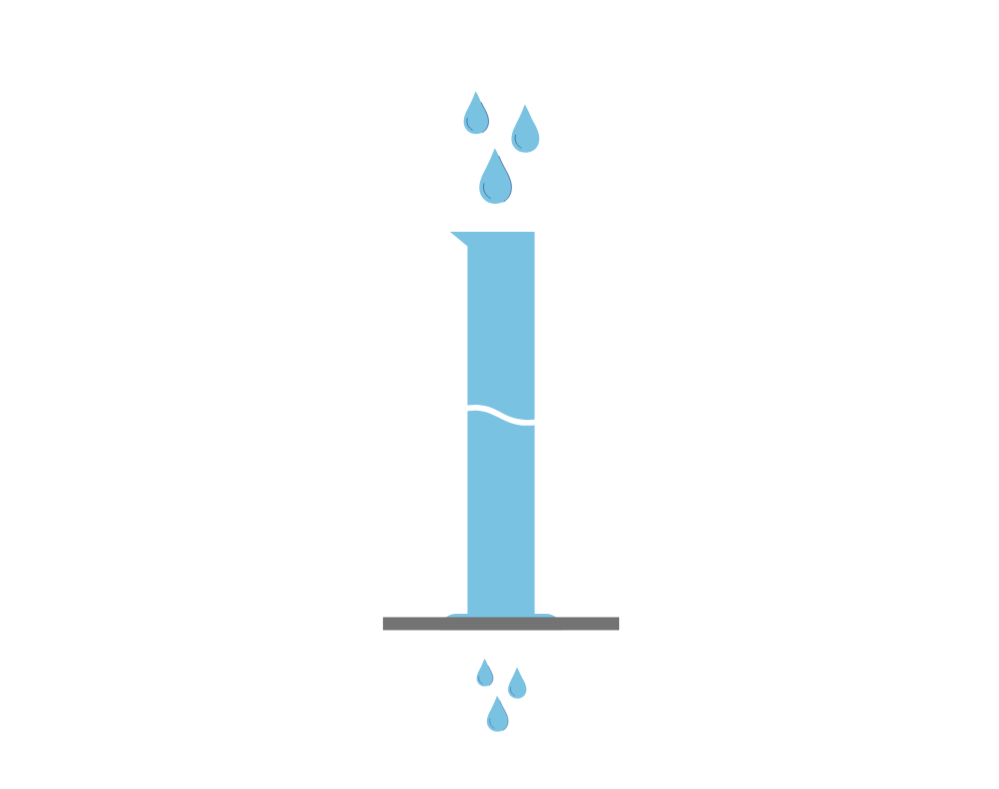
What is a water column?
The water column is a unit of measurement that indicates how waterproof a tent material is. It describes the pressure a certain amount of water can exert on the tent before it penetrates the material. The higher the water column, the better the protection against water and the more waterproof the tent.
The water column is measured in millimeters (mm). A tent with a water column of 1,000 mm can therefore withstand a pressure of 1,000 mm of water before moisture penetrates the material. A tent with a higher water column, such as 3,000 mm or 5,000 mm, is correspondingly more resistant to rain.

For practical use:
- A tent with a water column of 1,000–2,000 mm is suitable for light rain and short stays.
- Tents with 3,000–4,000 mm are suitable for moderate rain and longer stays.
- Tents with 5,000 mm or more offer very high levels of protection and are ideal for extremely wet weather or for use in particularly demanding conditions.
The water column is measured in millimeters (mm). A tent with a water column of 1,000 mm can therefore withstand a pressure of 1,000 mm of water before moisture penetrates the material. A tent with a higher water column, such as 3,000 mm or 5,000 mm, is correspondingly more resistant to rain.
The tent equipment
Many tents offer practical features that can make your stay more enjoyable. A comfortable and functional tent is essential for every camper. Here we'd like to briefly introduce some of these features:
Ventilation openings
Good ventilation is essential for a tent. Make sure the tent has sufficient vents that can be easily closed in bad weather. This not only prevents condensation but also ensures a pleasant and fresh indoor climate.
Sleeping cabins
Sleeping cabins in tents offer a high level of comfort and privacy. They are often blacked out to ensure a restful sleep. They also help divide the tent into clearly defined areas, allowing for better use of the interior space.
apses
Vestibules provide additional storage space within the tent. They aren't part of the inner tent, but rather are attached to the main tent. This allows you to safely store your gear and luggage, protected from the elements, without having to keep them in the sleeping area.
Pack size
Especially when traveling or hiking, it's important to consider the tent's weight and pack size. A lighter tent that takes up less space in your luggage makes transport much more comfortable. Many tents are equipped with compression straps that further reduce the pack size. But be careful: A very small weight and pack size often come at the expense of features and material quality. Depending on your intended use, you should find a balance between weight, pack size, and quality.
Advantages disadvantages
Tent materials
Advantages:
- Lightweight: Polyester is a lightweight material that makes the tent easy to transport.
- Waterproof: Polyester has good waterproof properties and is therefore particularly suitable for use in the rain.
- UV resistance: It is less susceptible to UV damage and remains more durable in strong sunlight than many other fabrics.
- Cheaper: Polyester tents are generally cheaper than tents made of other materials.
Disadvantages:
- Less breathability: Compared to natural materials such as cotton, polyester can be less breathable, which can encourage the formation of condensation inside.
- Less durable: Compared to other materials like nylon, polyester can wear out faster, especially when exposed to constant sunlight or extreme weather conditions.
Advantages:
- Lightweight and robust: Nylon is also a very lightweight material that is also very strong and durable.
- High strength: Nylon holds well under tensile stress and is less prone to cracking or damage.
- Waterproof: With appropriate impregnation, nylon can be very waterproof and effectively keeps out rain.
Disadvantages:
- UV sensitivity: Nylon is more susceptible to UV damage than polyester. Over time, it can become brittle under intense sunlight.
- Less breathability: Like polyester, nylon can also be prone to condensation because it is not particularly breathable.
Advantages:
- Breathability: Cotton is a natural fabric that has excellent breathable properties, which helps ensure the tent is well ventilated and reduces condensation.
- Comfort: Cotton tents provide a pleasant indoor climate, especially in hot temperatures, as they transport moisture from the inside to the outside.
- Durability: Cotton is extremely durable and can be used for many years without losing its strength.
Disadvantages:
- Heavy: Cotton is significantly heavier than synthetic materials such as polyester and nylon, which makes transporting the tent more difficult.
- Sensitivity to moisture: Without waterproofing, cotton can absorb moisture, making the tent heavy and prone to mold growth. Regular care and re-waterproofing are necessary.
- Longer drying time: Cotton takes longer to dry after rain or moisture.
Advantages:
- Waterproof and breathable: Gore-Tex is known for its exceptional waterproofness and breathability. It keeps rain out while allowing moisture to escape, reducing the formation of condensation inside the tent.
- High quality: Tents made of Gore-Tex or similar membranes offer very high performance and are particularly suitable for demanding conditions.
Disadvantages:
- Cost: Gore-Tex is more expensive than many other tent materials, which increases the overall cost of the tent.
- Maintenance: To maintain its waterproof properties, Gore-Tex must be regularly maintained and impregnated.
Advantages:
- Reinforced structure: Ripstop nylon features a special weaving technique that makes the material particularly tear-resistant. It's resistant to abrasion and minor damage.
- Lightweight and durable: Like regular nylon, ripstop nylon is lightweight yet durable, making it ideal for backpacking and hiking.
Disadvantages:
- Less UV-resistant: Ripstop nylon is also susceptible to UV damage if it is not adequately protected.
- Less breathable: Ripstop nylon has similar ventilation properties to regular nylon and can lead to condensation.